Reading the Structure of Space and Time in The Sea of Fertility
The Reporting Trip on 22nd July 1970
Reconstructing Geographic Traces and Memory
In Volume 4 of Yukio Mishima’s The Sea of Fertility, The Decay of the Angel, the aging lawyer Shigekuni Honda realizes he has only a few days left to live.
He departs from the Miyako Hotel in Keage, Kyoto, and travels to Gesshu-ji Temple in Obitoke, Nara,
On his way, he passes through the Daigo district. The prose in this episode departs from Mishima’s signature “ornamental” style, yet evokes a surprisingly gentle and unhurried sense of time.
In fact, Mishima himself undertook a reporting trip from Keage to Ensho-ji Temple in Obitoke on 22nd July 1970, as recorded in his creative notebook.
The “snack bar with parking lot” mentioned in the novel was known as “Snack Swamp,” located in front of the former Kyoto City Eastern Clean Center.
It remained there until the early 2010s, but has since been replaced by a condominium.
The “bamboo leaves drooping over the expressway” likely refer to a bamboo grove along the outer ring road in Iga, Momoyama-cho, Fushimi Ward (see photo below).
Although the novel states that the car entered Uji City, in reality, one passes through Naramachi Uji before re-entering Fushimi Ward in Kyoto after crossing that area.
The “edge of a cliff, a dumping ground for cars” is presumed to be along the Aiba River near the ohuke housing complex and the Ishida-Mori-Higashi intersection of
the outer ring road. In the 1980s, this riverside embankment resembled a junkyard.
Style and Timeline
While the narrative tone in The Decay of the Angel is relatively even and brisk, it paradoxically allows for a leisurely perception of time- especially in scenes of travel and reflection.
The Symbolism of the Imperial Abbess
Gesshu-ji Temple, a fictional counterpart to Ensho-ji Temple in Nara, serves as a symbolic space of silence and seclusion. Ensho-ji has historically been led by imperial
or aristocratic abbesses and maintains deep ties to the Imperial Court. Closed to the public, it embodies a quietude that mirrors Satoko’s withdrawal from the world-
a private dream space that resists observation, interpretation, and intrusion.
Echoes of Showa-Era Scenery
The Yamashina Minamizume (now the Yamashina Station exit) and Daigo districts represent the kind of rugged, semi-anonymous urban landscapes seen across postwar Japan.
Yet even today, traces remain -blue-glazed roof tiles, synthetic building materials- that echo the aesthetic of the Showa 40s (1965-1975).
These areas appear briefly in The Sea of Fertility as transitional spaces, and though little known, they carry the texture of “the last summer”
as depicted in the final chapter- including scenes in Kizu, Obitoke, and the garden of Ensho-ji Temple.
References
Nobuko Arimoto/A Research of Manuscript on "The Sea of Fertility" - Around of the final episode - /Hiroshima univ.Bulletin of the Research Center for the Technique of Representation vol.5Yasuhiro Ozawa/The Structure of The Temple of Dawn and The Decay of the Angel/ Bulletin of College of Education, University of the Ryukyus Issue Number 34, p. 181-207, Issue Date 1989-03 : 181-207
Photo
"Bamboo leaves drooping over the expressway" at Iga, Momoyama-cho, Fushimi Ward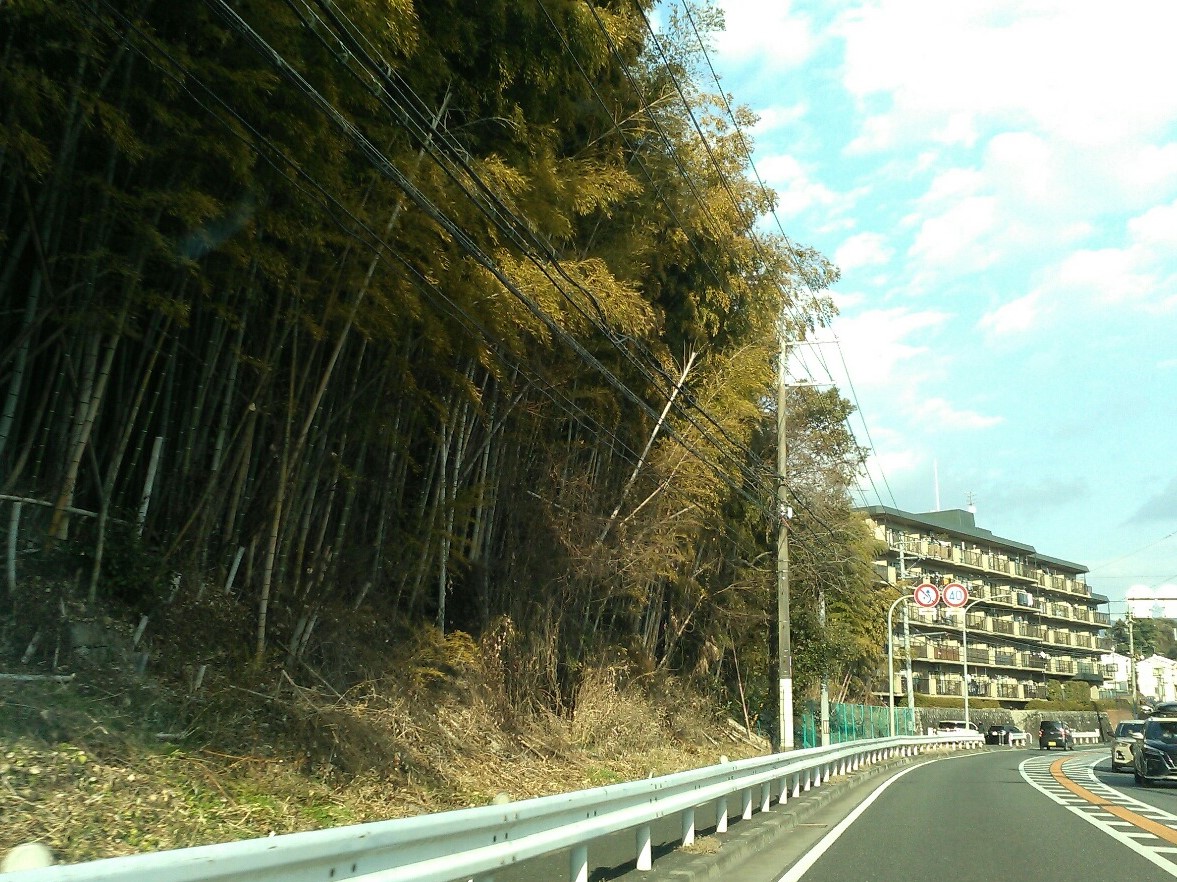
Written by Keishiro Murata
A strategic thinker and literary critic based in Kyoto, Japan.
Return to home
Return to information for use
Return to FAQ
Go to The Structure of Forgiveness and Rebirth in Phoenix: The Life Chapter
Go to The Framework of Dream Membrane Theory: A Comparative Analysis of Yukio Mishima’s The Sea of Fertility and David Lynch’s Twin Peaks: The Return